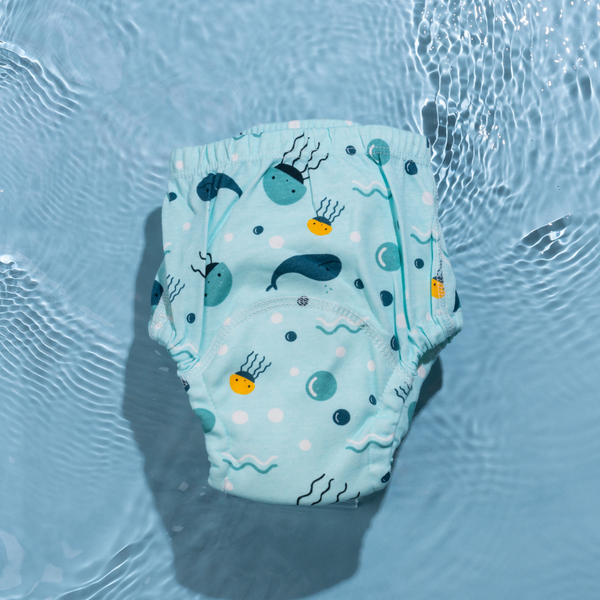
Wondering how to wash reusable toilet training pants or training underwear after an accident? The short answer is to change them promptly, follow the product-specific wash setting, and dry them completely before the next wear.
Rudie Baby Toilet Training Pants and Toilet Training Underwear are different products, so their current care instructions are not identical. This guide gives you the exact routine for each one, plus a simple wash rotation that makes busy toilet-training weeks easier.
What to do straight after an accident
Start by changing your child promptly. Both products are designed to let a child notice wetness, but there is no benefit in leaving wet fabric against their skin once you know an accident has happened.
For a wet accident, put the used pair somewhere ventilated until wash time rather than leaving it tightly rolled in a bag. If there is poo, tip any solid waste into the toilet first. Follow the sewn care label before using a stain treatment, bleach, sanitiser or other laundry additive.
A simple routine is usually enough:
- Change the wet or soiled pair promptly
- Remove solid waste before machine washing
- Keep used pairs separate from clean clothing
- Wash according to the correct product instructions below
- Let every layer dry fully before reuse or storage
If you are still deciding which product suits your child's stage, our training pants versus training underwear guide explains the difference in feel, absorbency and intended use.
How to wash Rudie Baby Toilet Training Pants

The current care instructions for Rudie Baby Toilet Training Pants are:
- Wash after use on a gentle machine cycle
- Line dry for the best result
- Tumble dry on low only when needed
- Stretch and reshape the pants gently after washing to help maintain their fit
These pants have an absorbent cotton-gauze core and a waterproof barrier. They are made for toilet-learning accidents rather than a full wee, so washing them like ordinary everyday underwear without checking the care label is not the best approach.
Make sure the absorbent centre and thicker seams feel completely dry before putting the pants back in the drawer. If you wash several pairs together, give them enough room in the machine to move through the cycle.
For sizing, absorbency and the difference between each training stage, see our complete reusable training pants guide.
How to wash Rudie Baby Toilet Training Underwear

The current instructions for Rudie Baby Toilet Training Underwear are slightly different:
- Machine wash cold
- Line dry, or tumble dry on low
- Change the underwear after an accident
- Allow the absorbent area to dry fully before reuse
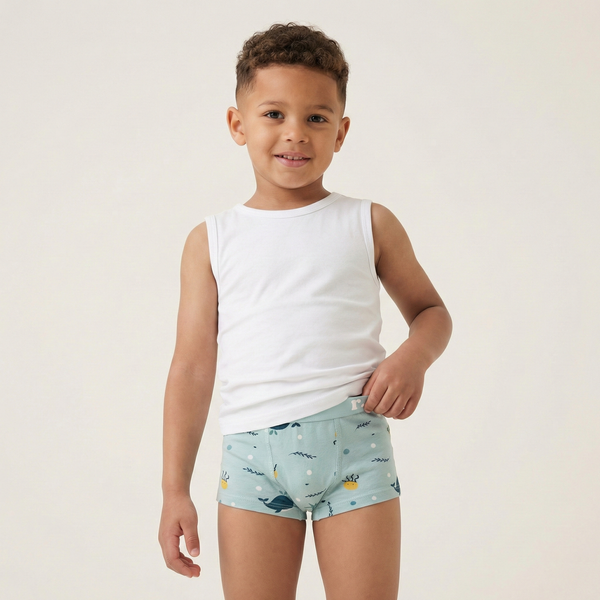
Training Underwear is the slimmer final step before ordinary undies. It is designed for children who are nearly trained and only have an occasional small miss. It is not a nappy and is not designed to hold a full wee.
Because the fabric and construction differ from Toilet Training Pants, keep the two care routines separate. If the sewn label on your pair gives more specific instructions, the label wins.
Can training pants and underwear go in the washing machine?
Yes. Both current Rudie Baby products are machine washable. The important part is using the correct setting for the product:
- Toilet Training Pants: use a gentle machine cycle
- Toilet Training Underwear: use a cold machine wash
Do not assume that a hotter or harsher cycle is automatically better after an accident. Waterproof barriers, absorbent layers, elastic and soft fibres all need to keep their shape and function. Check the sewn care label before changing the temperature or adding a strong laundry treatment.
If the pants are coming home from childcare, ask educators to place wet items in a separate wet bag without washing or soaking them in an unknown product. Our toilet training at childcare guide covers what to pack and how to keep the routine consistent.
Can they go in the dryer?
Yes, on low when needed. Both current product instructions allow low tumble drying, although line drying is the preferred option for Toilet Training Pants.
Before using the dryer:
- Check the sewn care label on the exact pair
- Choose a low setting rather than high heat
- Remove the items when dry instead of repeatedly running a long hot cycle
- Gently reshape Toilet Training Pants after washing
Do not store either product while the thicker centre is still damp. If the outside feels dry but the absorbent area feels cool or heavy, allow more drying time.
For overnight use, remember that drying instructions do not change absorbency. Training Pants and Training Underwear are for small accidents at different stages. Our night-time training pants guide explains when they can help and when a night nappy is still the practical option.
How many pairs do you need for a workable wash rotation?
There is no universal number because accident frequency, childcare days and laundry habits vary. Start with the number of changes your child commonly needs between washes, then add a clean spare for the bag and another for unexpected delays.
A practical way to calculate it is:
- Count the average number of wet changes on a typical day
- Multiply that by the number of days between laundry loads
- Add one clean spare for childcare, outings or the car
- Add a little drying time if you mainly line dry in cooler weather
For example, a child using two pairs a day with washing every second day will need at least four in circulation before adding spares. A child who is nearly trained and only wears Training Underwear for outings may need fewer.
The goal is not to buy the largest possible pile. It is to avoid running out of dry pairs halfway through a normal week.
The honest bottom line
Wash Rudie Baby Toilet Training Pants on a gentle cycle, line dry where possible, tumble dry on low only when needed, and reshape them gently after washing. Machine wash Toilet Training Underwear cold, then line dry or tumble dry on low.
Change wet items promptly, remove solid waste before washing, check the sewn label before using strong laundry treatments, and make sure the absorbent layers are fully dry before reuse.
If you are unsure which pair you own or cannot read the care label, send Rudie Baby a photo before guessing. We would rather help you choose the correct wash routine than have you risk the product.